Wednesday, 18 March 2020

The March on Washington, 1963- Nicola Sills

The March on Washington, 1963

On the 28th August 1963, roughly 200,000 African Americans marched alongside thousands of white men and women to the Lincoln Memorial in Washington D.C.,[1] in order to demand civil and economic rights for African Americans, as part of the civil rights struggle.[2]
The phenomenon of marching on Washington was not a new one, but in fact was a long American tradition.[3] However, this one was particularly significant because of the number of people, being the largest civil rights demonstration in the country, broadcast to millions more through international coverage,[4] but also because it was 100 years since the Emancipation Proclamation was signed,[5] which is why the Lincoln Memorial was decided: as a symbolic significance.[6] The marchers came from all over the country, on foot, by private cars, on planes and on trains,[7] as a way to protest African American treatment at the hands of those wielding firehoses, dogs, violence and arrest.[8] Protestors argued that the United States still faced a racial crisis, despite it being 100 years since the Emancipation Proclamation, 175 years since the adoption of the Constitution, and 173 years since the adoption of the Bill of Rights.[9]

During the early years of the Cold War, racial discrimination was described as America’s ‘Achilles Heel’, with the news blanketed by reports of post-war lynchings and segregation for the world’s press to see, which led to US allies questioning if democracy was really the best societal system, if these acts were happening under it.[10] For these reasons, as the activists prepared to march on Washington, Americans in Paris and other places around the world began to mobilise as well,[11] in a display of solidarity, for those who had been mistreated for MLK Jr. giving his famous "I have a dream" speech. centuries.

The day was expected to bring attention to the movement and increase pressure on the government to enact social reform, with the ultimate goal being to get Kennedy’s support on a meaningful Civil Rights Bill.[12] However, from the other point of view, violence was expected, though nothing happened and it ended up being a peaceful event.[13] The day ended with Martin Luther King giving a dramatic, and arguably most influential speech, in a truly monumental moment for civil rights, despite there being more struggles to come.[14] That said, the event led to the Civil Rights Acts in 1964 and 1965.[15]

[1] James J. Hayden, “Correspondence: Civil Rights: March on Washington,” Social Science vol.38, no.4 (1963): 245.
[2] Susan Pitts Santoli and Paige Vitulli, “Examining the 1963 March on Washington for Jobs and Freedom through Primary Sources,” Black History Bulletin vol.75, no.2 (2012): 7.
[3] Mary L. Dudziak, “The 1963 March on Washington: At Home and Abroad,” Revue française d’études américaines no.107 (2006): 61.
[4] Susan Pitts Santoli and Paige Vitulli, “Examining the 1963 March on Washington for Jobs and Freedom through Primary Sources,” Black History Bulletin vol.75, no.2 (2012): 7.
[5] Ibid.
[6] Mary L. Dudziak, “The 1963 March on Washington: At Home and Abroad,” Revue française d’études américaines no.107 (2006): 63.
[7] James J. Hayden, “Correspondence: Civil Rights: March on Washington,” Social Science vol.38, no.4 (1963): 245.
[8] Eugene Carson Blake, “In His Own Words: Address at the March on Washington, 1963,” The Journal of Presbyterian History (1997-) vol.76, no.4 (1998): 290.
[9] Eugene Carson Blake, “In His Own Words: Address at the March on Washington, 1963,” The Journal of Presbyterian History (1997-) vol.76, no.4 (1998): 290.
[10] Mary L. Dudziak, “The 1963 March on Washington: At Home and Abroad,” Revue française d’études américaines no.107 (2006): 62.
[11] Mary L. Dudziak, “The 1963 March on Washington: At Home and Abroad,” Revue française d’études américaines no.107 (2006): 61.
[12] Mary L. Dudziak, “The 1963 March on Washington: At Home and Abroad,” Revue française d’études américaines no.107 (2006): 63.
[13] Susan Pitts Santoli and Paige Vitulli, “Examining the 1963 March on Washington for Jobs and Freedom through Primary Sources,” Black History Bulletin vol.75, no.2 (2012): 7.
[14] Ibid.
[15] Ibid.

The Abolition of the Death Penalty in Britain- Nicola Sills

The Abolition of the Death Penalty in Britain

On the 13th August 1964, Gwynne Evans and Peter Allen were hanged, due to their conviction for the murder of a man named John West at his home in Cumbria, during a robbery that had happened four months before. Both were hung at 8am, on the same day, Evans in Strangeways Prison, and Allen in Walton Prison in Liverpool.[1] These were the last Britons to die, legally, by capital punishment. Whilst evidently an enormous decision for the country, the debate raged in mid-Victorian Britain, with the intensity unlike that in the mid-twentieth century: there were at least eight occasions between 1840 and 1969 when the Commons voted on measures to abolish the death penalty.[2]

The debate raged on, with E. Roy Calvert, a young Quaker, and secretary of the National Council for the Abolition of the Death Penalty (est. 1925),[3] wrote the first dispassionate and scientific argument for total abolition in 1925.[4] He declared that “… the death penalty was not only wrong but that it was ineffective and could even stand in the way of justice.”[5] The 20th Century was considered a more modern era, meaning that ancient and harmful practices should no longer be tolerated by the state, which was a powerful argument for the time. However, these urgings had been rumbling on for some time, and still had a way to go until the 1960s. Executions were quickly becoming a thing of the past, with the last execution for stealing cattle in 1820, capital punishment for burglary, robbery and arson ended in 1835, and public executions ending in 1868,[6] meaning that it took nearly 100 years to end executions entirely following the end of public killings. Furthermore, in 1908, the death sentence ended for children under 16, and the age was raised to over 18 in 1933,[7] suggesting that state killings were fast becoming a thing of history. 

There was a strong suggestion that life imprisonment should be the alternative to the death penalty,[8] coupled with a desire to impose firm sentences, but it appeared that long sentences should be subject to review.[9] The Bill to end the death penalty for murder was introduced on 4th December 1964 and reached the Statute Book on 2nd November 1965.[10]This Murder Act was passed into law on the assumption that the death penalty would be suspended for five years, however Parliament reaffirmed the vote in 1969, permanently abolishing the death penalty in England, Scotland and Wales (with Northern Ireland following suit in 1973).[11]

This was a historic event in penal reform, meaning that the hangman’s noose was consigned to the museum along with the thumbscrew,[12] however, capital punishment was still technically on the books for espionage, treason and piracy until a total abolition in 1998.[13]

[1] Steve Crawshaw, “The last Britons to hang,” The World Today vol.70, no.4 (2014): 38.
[2] Randall McGowen, “History, Culture and the Death Penalty: The British Debates, 1840-70,” Historical Reflections vol.29, no.2 (2003): 229.
[3] Frank Dawtry, “The Abolition of the Death Penalty in Britain,” The British Journal of Criminology vol.6, no.2 (1966): 188.
[4] L. J. Blom-Cooper, “Murder (Abolition of Death Penalty) Act 1965,” The Modern Law Review vol.29, no.2 (1966): 184.
[5] Frank Dawtry, “The Abolition of the Death Penalty in Britain,” The British Journal of Criminology vol.6, no.2 (1966): 188.
[6] Frank Dawtry, “The Abolition of the Death Penalty in Britain,” The British Journal of Criminology vol.6, no.2 (1966): 187.
[7] Frank Dawtry, “The Abolition of the Death Penalty in Britain,” The British Journal of Criminology vol.6, no.2 (1966): 188.
[8] Frank Dawtry, “The Abolition of the Death Penalty in Britain,” The British Journal of Criminology vol.6, no.2 (1966): 185.
[9] Frank Dawtry, “The Abolition of the Death Penalty in Britain,” The British Journal of Criminology vol.6, no.2 (1966): 186.
[10] L. J. Blom-Cooper, “Murder (Abolition of Death Penalty) Act 1965,” The Modern Law Review vol.29, no.2 (1966): 184.
[11] Steve Crawshaw, “The last Britons to hang,” The World Today vol.70, no.4 (2014): 38.
[12] L. J. Blom-Cooper, “Murder (Abolition of Death Penalty) Act 1965,” The Modern Law Review vol.29, no.2 (1966): 186.
[13] Steve Crawshaw, “The last Britons to hang,” The World Today vol.70, no.4 (2014): 38.

Thursday, 12 March 2020

Beatlemania

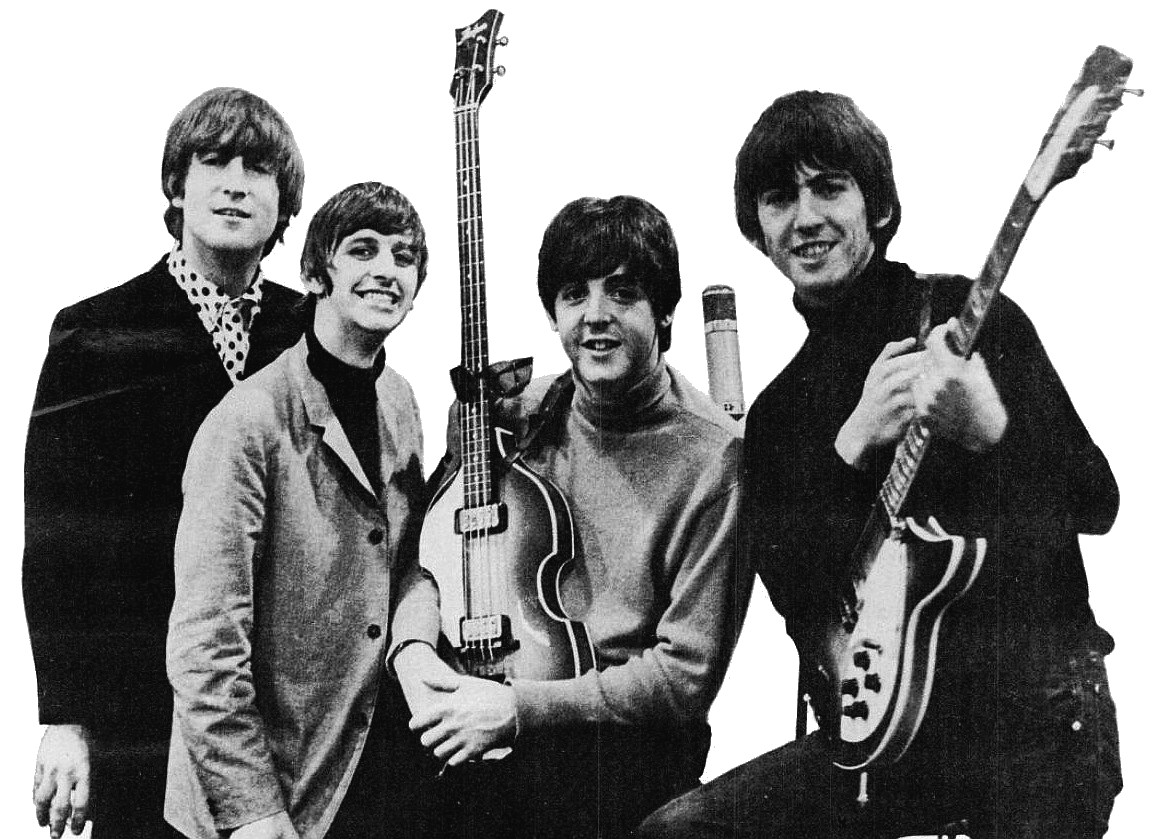
Not that they need an introduction but The Beatles were an English rock band who formed in Liverpool in 1960 the band comprised of John Lennon, Paul McCartney, George Harrison and Ringo Starr, they peaked in 1964 and stayed around until their break up in 1970.

It is not be denied that The Beatles heavily influenced the music industry but their influence on both the social and cultural revolution of the Sixties arguably goes further than anyone else at this time especially in Britain.


Naturally, The Beatles impact was at its highest when they were an active band during the Sixties and 'Beatlemania' (around 1963-1966). The Beatles influence on Britain originally was seen as 'rebellious', this was not helped by their release of 'A Hard Days Night' in 1964 which saw them chased by police in the video therefore backing up their up 'disrespect' for authorities. Although it is hard to see a band such as The Beatles as rebels and anti authority, they still we're seen as rebellious and poor role models for the younger generation in the Sixties.

For many people, the Sixties are the Beatles and the Beatles are the Sixties, they were most likely the most influential people in the Sixties, definitely in Great Britain, they helped popularise the Hippie Movement outside of the United States as well as spreading the word of the Antiwar Movement against the Vietnam conflict.

The Sixties was one of the most definitive decades in terms of Art, Music and Culture and the Beatles played a vital role within these areas, by doing this they essentially changed the lives of youths across Britain and the world. They were important in the sixties as it was a generation who embraced counterculture and The Beatles were just that, their new ideas, songs, generation gap and drugs were just part of how they had an impact.


Many of the cultural movements in the 1960s were helped along or inspired by the Beatles, especially in Britain. The bands rise to fame and both national and international prominence highlighted the now youth driven postwar society. They and the younger generation drove the change from American dominance over the cultural influences during the Sixties which led to the generation at the time following in the footsteps of the Beatles and pushing for this change compared to nothing their parents generation had seen before, therefore showing how big the generational gap really was during the 1960s.


Joe Keeley

The American Antiwar Movement in 1960s

The movement against the involvement of the United States in the Vietnam War started off small with Peace Activists and left leaning intellectuals but became popular especially on College Campuses. Although it started off small, by 1965 the antiwar movement started to gain real traction and prominence after the United States started bombing the North of Vietnam.

Antiwar marches and protests started to gain even more popularity due to groups such as the Students for a Democratic Society (SDS) attracting a wider base of support and backing in the three years after the start of the United States campaign in Vietnam, this reached its height with the TET Offensive by the Northern Vietnamese in 1968 showing that the war was not going to come to an end anytime soon.

In 1967, one of the largest demonstrations took place at the Lincoln Memorial which saw around 100,000 protesters take to the streets, some 30,000 carried on to the Pentagon that night. They were confronted by U.S Marshals and Troops who were protecting the building itself, hundreds were arrested.

In February 1967, 32% of Americans polled agreed that becoming involved in the war had been a mistake. After Tet, that figure rose to 50% [1].  Although the Antiwar Movement in the United States in the sixties was not the reason the Vietnam War was concluded it has to be said that the widespread public opposition to the war also is what helped in March to convince Johnson's Wise Men, a bipartisan advisory group of former government officials and Wall Streeters, that the game was up in Vietnam [1].

Despite the Vietnam era antiwar movement remaining one of the largest, most intense movements in American history it is often disregarded by social-movement scholars. This could be argued to be due to the fact that the Gulf of Tonkin Resolution that led to a dramatic escalation in American involvement in Vietnam was passed by congress on August 1964, a visible antiwar movement only coalesced the following year. And even though the United States remained deeply enmeshed in Vietnam until the fall of Saigon in 1975, domestic contention over that involvement dropped to almost none following the Paris Peace Accords in 1973. [2].

In the same vein, although the antiwar movement was growing during the Sixties, a silent majority of American citizens still supported the Vietnam War effort, many Americans agreed that US involvement in Vietnam was a mistake but the idea of a US military defeat was completely off the table.

[1] The Doves Ascendant: The American Antiwar Movement in 1968
[2]The War at Home: Antiwar Protests and Congressional Voting, 1965 to 1973

Joe Keeley


Monday, 9 March 2020

Talkin bout my generation: Mods, Rockers, Moral Panic and Generational Conflict

             Talkin bout my generation: Mods, Rockers, Moral Panic and Generational Conflict 

The 1960s was a time in recent history known for its counterculture and revolution in society ranging from clothing and music to drugs and sexuality. The 'Swinging Sixties arguably remain the defining decade for Great Britain, London especially saw this growth as transitioned from a conservative, overcast city only just getting over the Second World War into a world capital representing freedom, hope and excitement. 

The teenage generation of the Sixties were the first generation that was significantly different to their parents generation, they were now conscription free and were able to have both more fun and freedom. 

One of the biggest changes to this generational gap of the Sixties was the emergence of two groups, The Mods and The Rockers: 
The Mods were a subculture that originally started in London which then spread throughout the UK as well as influencing fashions and trends across the globe. Their main focus was on music and fashion, mainly Modern Jazz. 'Mod' was short for Modernist which first appeared in the East End of London around 1958, they fused fashioned from across Europe to get their unique style but mainly used inspiration from both the French and Italian fashions. As mentioned they  
were at first focused on Modern Jazz but eventually started to move more towards Rock, their chose of transport was Vespa and Lambretta scooters. This way of life, taking speed or amphetamines and dressing the way they did provided this teenage subculture an escape from their limited or otherwise normal suburban lives. 
"Now we could do what we wanted, go where we wanted, and have it all on our own terms. We at whelks and ice cream and pissed about the pier. It was a different buzz to the smoke (London)", Charlie Steele, Former Mod.
The Rockers unlike the Mods were 1950s 'Throwbacks' who name come from their love of Rock n Roll. They wore ots of leather, silver studs and heavy boots - the complete opposite to the Modernists of the 60s. They modelled their beer drinking, cigarette smoking look on their 1950s Hollywood heroes such as James Dean and Elvis. 

Although the Mods were an important and famous subculture in the Sixties, their war and seafront conflicts with the Rockers of the 60s were front page news across the country. The government at the time saw these two groups in particular as a major threat to law order, due to the fact that the people involved were not from the backgrounds usually involved in these types of 'Moral Panic' and disorderly behaviour. The Governments initial reaction was to not actually do anything with this 'problem' although it did subsequently raise fines for perpetrators as the situation worsened. It also linked the problem to Juvenile Delinquency which was an easy out and way to describe this teenage revolution. 

The famous 'Mods vs Rockers' battles, especially that of the one in Margate in 1964 which saw 4 men imprisoned, and 36 people fined a total of £1,900, was seen as the first 'Moral Panic'. Although the media portrayed this in a negative light, many of the younger generation saw this as advertising new and exciting lifestyles that they liked the look of and could use these groups and style as a way to escape their own lives and experience something new for the time. 

This idea of generational conflict in the Sixties with all of these subcultures such as Mods and Rockers seems to be exaggerated and not as negative as what is first seemed. An opinion poll from the start of the Sixties stated that 59% of Britons had a generally positive impression of the young generation. Therefore despite this 'Moral Panic' over the youth in Britain, it was a relatively good place to be a younger person. It even goes as far as the fact that many other European countries such as Germany regarded Britain as the 'Promised Land' due to the fact that no other country had accepted this youth freedom as much as us Great Britons. 

Joe Keeley


Wednesday, 4 March 2020

Hidden Figures


Hidden Figures

25953369. sy475 The 1960s is known as a decade filled with change and progress, yet until recent years many key individuals behind the Space Race were kept hidden and didn’t receive the credit they were due. Following the release of the 2016 film Hidden Figures, based on the book Hidden Figures: The American Dream and the Untold Story of the Black Women Mathematicians Who Helped Win the Space Race by Margot Lee Shetterley, there has been light shed onto a previously untold story, leading to wider recognition to the role of African American women in the space program.[1] The story is centred around the lives of three black women, Dorothy Vaughan, Mary Jackson and Katherine Johnson, who in the early 1960s worked to calculate the launch and re-entry of John Glenn’s 1962 mission to orbit the earth.[2] Their work was vital in 1962 as electronic computers were still in the early phases and not as trusted as the female computers at Langley, shown by John Glenn’s famous request to get “the girl”, meaning Katherine Johnson, to check the numbers for his re-entry.[3]

From as early as 1935, Langley Memorial Aeronautical Laboratory moved towards employing female computers, with Virginia Tucker being one of the first four to be included in the new programme.[4] The demands of the Second World War on the Aerospace industry and Roosevelt’s policy of desegregation in the military, meant that they moved towards employing African American women as well, in the late 1940s.[5] It offered women an unrivalled position as they were able to continue working there after marriage and whilst raising a family, which was unusual at the time.[6] It represented a challenge for the women, a way for them to use their education and feel fulfilled, rather than resigning to the life of a housewife and mother.
Mary Jackson at work in NASA’s Langley Research Centre.
Text Box: Figure 1 - Mary Jackson at Langley

But Hidden Figures is not just one example of how the space race is being re-examined. Historian Roger Launius has termed it the ‘New Aerospace History’, as there has been a shift in recent years towards looking at the space race in terms of the wider context of the social and political issues of the time.[7] It is hard to examine the work of NASA without considering the effect of Cold War politics, which was a large motivator for the need to launch a man into space and beat their Russian counterparts in the process. The popularity of the book and film show the increasing interest in stories that centre around women overcoming the restrictions of gender within the workplace and society in general.
Through highlighting the work of these women, we are not just highlighting how African American contributions are often overlooked, but how African Americans made considerable contributions to society, in an era when they were considered second class and inferior to whites. The 1960s was full of protests and movements to improve civil rights for blacks, and while there was some success, it is a shame that it has taken over 50 years for success stories such as Hidden Figures to be brought into the light.

By Fyona Cunningham

[1] Teasel Muir-Harmony, ‘The Women Who Advanced Aerospace’, Reviews in American History, Vol. 47 No. 2 (June 2019), pp. 263-270 (p. 264).
[2] Marie Hicks, ‘Hidden Figures is a groundbreaking book. But the film? Not so much’, The Guardian, https://www.theguardian.com/science/the-h-word/2017/feb/13/film-hidden-figures-nasa-black-women-mathematicians-book (last accessed 4th March 2020).
[3] Kerry Kolbe, ‘Man versus machine: how computers replaced humans in the Space Race’, The Telegraph, https://www.telegraph.co.uk/films/hidden-figures/space-race-man-versus-machine/ (last accessed 4th March 2020).
[4] ‘Human Computers’, NASA, https://crgis.ndc.nasa.gov/historic/Human_Computers (last accessed 4th March 2020).
[5] Muir-Harmony, pp. 265-266.
[6] ‘Human Computers’.
[7] Muir-Harmony, p. 264.


The Background to the Cuban Missile Crisis


The Background to the Cuban Missile Crisis

With the Cuban Missile Crisis 60th anniversary on the horizon, it is inevitable that discussion of the events will increase again. Historians have spent the last six decades analysing the event in great detail to determine how the crisis developed initially and how it was resolved. In hindsight we can clearly see the escalating tensions between the Soviet Union, the United States and Cuba was bound to spill over into a form of conflict or crisis, despite attempts by some world leaders to bring the Cold War to an end. Kennedy took a strong stance against Cuba, aiming to end tensions, but his bold and somewhat aggressive attitude instead had the opposite effect.

Text Box: Figure 1 - Campaign Poster, JFK LibraryJohn F Kennedy was born on 29th May 1917 in Boston, Massachusetts.[1] No less than forty three years later he would become president on the United States. Kennedy was known as a charismatic president, younger than most and someone that brought ‘style, vigor and purpose to the White House’.[2] After winning an election based on promises that he would take a much firmer stance on Cuba than his predecessors, he launched a presidential term filled with tensions with the Soviet Union and focused on removing any perceived communist threats.[3] Therefore, this meant that the Cold War reached a period of escalation, not reduction, in terms of the potential risk of nuclear war under JFK.

Text Box: Figure 2 - Speech in New Jersey, JFK LibraryWhile the Cuban Missile Crisis represents the closest that we came ‘to the brink’, there are previous events to consider.[4] Castro had been receiving aid from the Soviet Union since 1960, which to America was a signal of their communist alliance.[5] Eisenhower was highly critical of Castro and had initiated covert plans to overthrow him, called The Bay of Pigs Operation.[6] The Bay of Pigs scandal in April 1961 was highly damaging to Kennedy’s reputation and many consider him to have generated a vendetta against Castro as a result. The unsuccessful operation where Cuban exiles were trained by the US to launch an invasion and insight civil unrest, eventually leading to Castro’s regime being overthrown, failed drastically and publicly for the president, with him taking responsibility for it during the aftermath.[7] He had put his faith in the CIA, inheriting a weak operation from the Eisenhower administration and choosing to continue with the plans. The humiliation pushed JFK to launch Operation Mongoose, a covert operation designed to find anyway to discredit and remove Castro from his position of power in Cuba.[8] Involving the CIA, they conducted covert sabotage operations in Cuba, some even aimed at assassinating Castro himself.[9]

Thus, when October 1962 arrived, tensions were already high between Cuba and the United States. The US were yet to rule out a further invasion of Cuba, leaving Cuba viewing The Bay of Pigs as a requisite to a full-scale land invasion in the near future. When Kennedy was informed of the missile sites of Cuba, it started the beginning of two weeks of meetings, plans and negotiations to try and resolve the situation while keeping America’s prestige intact. Ultimately, Kennedy’s pride had a large influence on his actions as he had publicly committed himself to a Cuban solution during his presidency, publicly failed during The Bay of Pigs Operation and had let the build-up of Soviet Missile bases on Cuba go unnoticed.[10] Without his continued attacks and aggressive attitude towards Cuba, the Cold War may never had needed to escalate to the extent that it did in October 1962, as he pushed Castro towards the USSR through their continued suspicions and policy of sabotage.

By Fyona Cunningham

[1] Thomas C. Reeves, John F. Kennedy The Man, The Politician, The President (Florida: Robert E. Krieger Publishing Co., 1990), p. 7.
[2] Ibid., p. i.
[3] James N. Giglio, The Presidency of John F. Kennedy (Kansas: University Press of Kansas, 2006), p. 51.
[4] Jim Rasenberger, The Brilliant Disaster JFK, Castro, and America’s Doomed Invasion of Cuba’s Bay of Pigs (New York: Scribner, 2011), p. 363.
[5] Ibid., p. 52.
[6] Giglio, p. 50.
[7] Ibid., pp. 58-59.
[8] Ibid., p. 65.
[9] Ibid.
[10] Ibid., p. 58